|
|
Background
information on San Pedro and the Bio-Cultura Project
Pre-Hispanic -
Spanish Conquest -
Independence and a brief democracy -
War -
Guatemala Today -
Environmental and social problems
The
legacies of our history.
History
shapes our lives. The consequences of our past can be seen in the
social and environmental issues we are facing today.
Pre-Hispanic
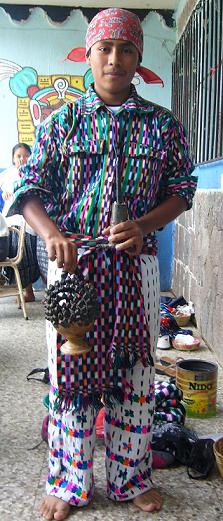
Here in San Pedro we are Mayan-Tzutujiles. Our ancestors came here
about 20 000 years ago, and grew maiz (corn) and beans as we
still do today. They developed precise calendars, charting the
exact phases of the sun, moon, and many planets and stars. Until
the Arabs took their knowledge to Europe, Mayan mathematics was
more developed than that in Europe. We recorded our history and
stories in written form, and built grand temples. Hospitality and
generosity were prized in Mayan society, and life was based in
spirituality.
Spanish conquest
The Spaniards
arrived in the Americas in1492, and killed or subdued anyone who
opposed their will to control our world. For almost 500 years
these invaders and their descendants have ruled Guatemala, using
Mayan labour to extract the natural resources, and imposing their
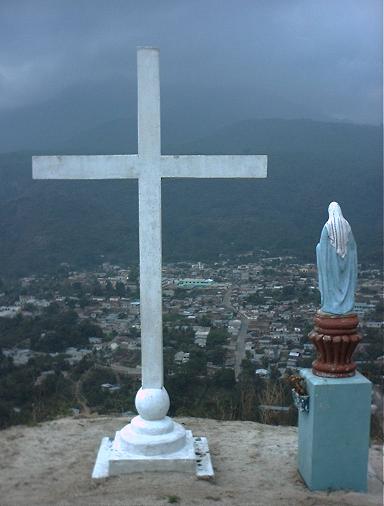
view of the world upon our people. The Spaniards also brought the
Catholic religion to the Americas. In many cases the Church
protected the Mayan people from the worst abuses.
Independence and a brief democracy
|
|
|
Although
Guatemala became independent of Spain in 1821, the situation for
Mayans became worse. Huge plantations were established, and our
people were forced to work because of debts they supposedly owed.
This system of 'debt peonage' was abolished in the 1930's, but
our Great-Grandfathers were forced to build roads instead. In
1945 President Arevalo was democratically elected. He developed a
social security and public health system, and liberal labour
laws. In 1951, Arbenz was elected. He began to redistribute
lands, breaking up the large estates and giving them to people
who were landless. He took the vast properties owned by the
US-based 'United Fruit Company' to give to the poor for growing
food. This caused the government of the United States to grow
concerned about 'threats to U.S interests'. They ordered the CIA
to support an invasion, and the Guatemalan government was
overthrown. Violent and oppressive military governments followed,
land reforms were reversed, and voting was restricted to the 25%
of citizens that were literate.
|
War
In1960
“La Violencia' began. This was a 36 year war that killed around
60 000 (mostly Mayan) people in the 1970's alone. The exact numbers
are still unknown, but over 200 000 Guatemalans were killed overall,
and more than a million were made homeless. In the 1980's, the
government under Rios Montt exterminated over 400 Mayan villages, and
anyone who opposed him was likely to be tortured and killed. Peace
accords were signed in 1996, yet the changes that were promised have
yet to eventuate. Many refugees remain homeless, and the wealthy 3%
of Guatemalans still own more than 70% of the cultivable land.
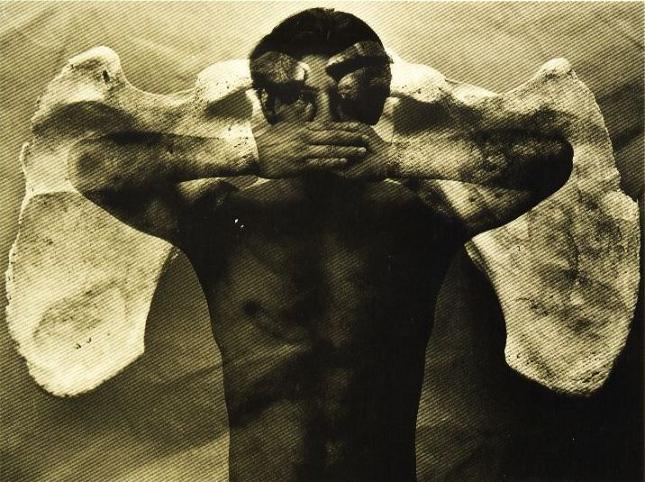
Image
from 'Guatemala Never Again- Impacts of 'La Violencia' , published by
the Human Rights Office of the Archbishop of Guatemala, 1998. Photo
by Daniel Hernadez.
Guatemala Today
|
Indigenous rights
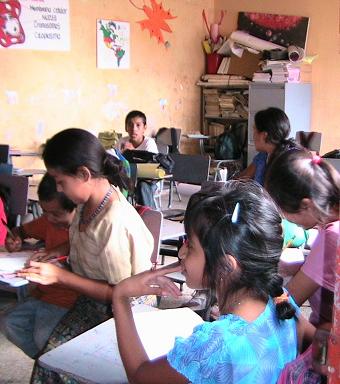
and basic social services are still lacking in Guatemala. While
around 75% of Guatemalan children are now enrolled in primary
school, only 25% have the opportunity to go to secondary school,
and less than 10% gain a tertiary education. The number of Mayan
children and young people in formal education is even less (even
today, only 0.3% of Mayan women gain a tertiary education), and
80% of all Guatemalans still live in extreme poverty. Field
workers and other labourers earn around US$3.50 a day. This is
not enough to support a family, especially if someone becomes ill
or has an accident. The majority of children do not have access
to a healthy diet or basic needs.
|
|
Environmental and social problems
Lack
of access to education, poverty, and racism contribute to the social
and environmental problems we face in Guatemala today. A few examples
of this include the burning or dumping of all types of rubbish, as
few people differentiate between plastic and organic waste. Chemicals
and products that are unwanted in other countries are 'gifted' to our
people, without our informed consent. Written warnings or
instructions on how to use poisonous sprays are of little use, as
many people cannot read or speak Spanish. Neither our national nor
local governments provide alternatives or educate the people about
the dangers of these practices.
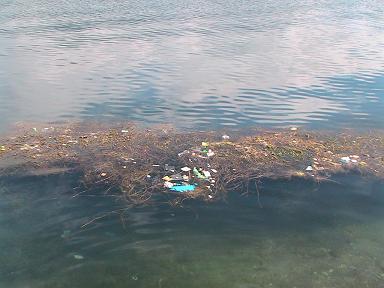
Litter
is blown or washed into our lake along with spray residues and
fertilizer run-off. Many people wash in and drink directly from the
lake. Lake water is also pumped into the town water supply. |
|
