|
|
Mayan values and Modern life in San Pedro
At
Bio-Cultura, we seek to combine the positive aspects of the modern
world with the wisdom and values of our ancestors so that the health
and well-being of our people and environment are improved.
We
have been lucky in San Pedro, in that we were not affected by the
war as directly as our neighbouring villages. Most land here is
still locally owned, although foreigners are now buying up the
land on the lake front. Today, most employment is in growing maiz
(corn), beans and coffee, and tourism related activities. We have
retained our Mayan language (Tzutujil) with it's unique
expression of the world. Many women still wear our traditional
dress, and some of our customs are still followed. The family is
still the centre of our daily lives, and most people have a deep
sense of spirituality. Extended families generally live together,
with the women's focus on cooking, cleaning and caring for the
children, and the men responsible for earning money. Most food is
cooked over wood-burning fires, therefore firewood is one both
one of the causes of deforestation, and a potential income
source.
The modern world
|
|
|
Consumerism
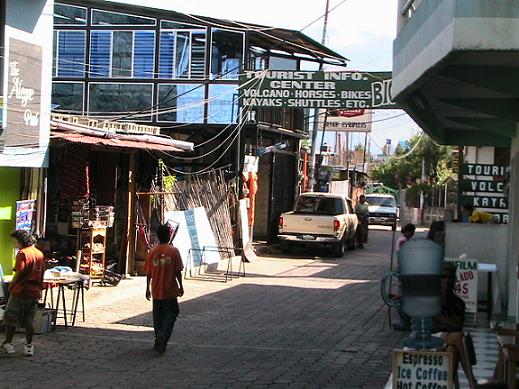
and sudden exposure to the modern world with it's new products
and values are rapidly changing our lives. Television has
increased our knowledge of the wider world, but it encourages us
to consume more, and increases the desire for lifestyles and
products that we never knew existed, and can't afford. Tourism
brings cash to our village and has created new employment
opportunities, but it has also created a drug trade and local
drug abuse has increased.
|
The tourist lifestyle highlights economic inequality- local restaurant workers generally earn about US$3.50- less than the price of the dishes they cook or serve. Both the Catholic and Evangelical churches have built schools and medical clinics in San Pedro, yet as the popularity of the Evangelical religions grow, so does the pressure to abandon our Mayan culture.
Our
ancestors asked permission from the spirits before cutting a tree
down or killing an animal, and only used what they needed. They knew
all things have a spirit, and deserve respect. They understood the
cycles of nature. Now our people kill and cut trees with little
thought. Sharing used to be commonplace, people swapped or gave away
food when they had enough. Today everything has a monetary value. We
grew our own medicinal herbs around our houses, but this knowledge
and practise is being lost. Today, people go to the pharmacies and
take unprescribed medicines without knowing what they are, at prices
they can little afford.
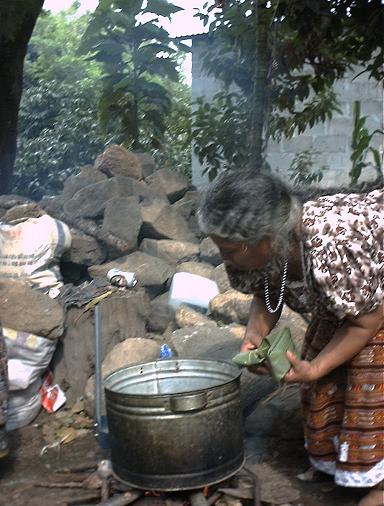
We used to use leaves to wrap and serve food, and the women carried
shopping in cane baskets on their heads, or in woven cloths. Plastic
bags are now seen as 'modern' and therefore a good thing, and
styrofoam plates and cups are commonplace. Before, throwing away
waste added nutrients to the soil. Now we burn plastic, dump all
waste together, and litter our streets and the lake. The old people
knew how to grow food without using sprays and artificial
fertilizers. Farmers now use modern pesticides, fertilizers and
herbicides without masks or protective clothing.
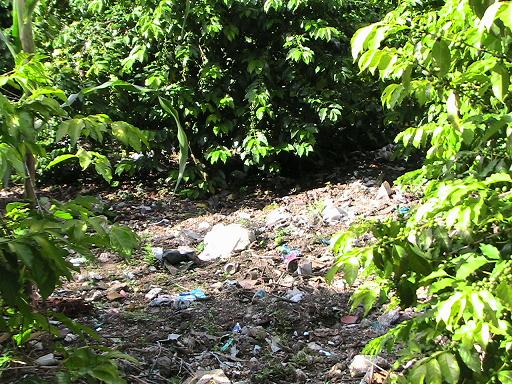
Plastic,
batteries, styrofoam and organic waste are all thrown under coffee
trees
At
Bio-Cultura, we hope to improve both the state of our environment and
our peoples health by bringing attention to these issues and offering
some alternatives.
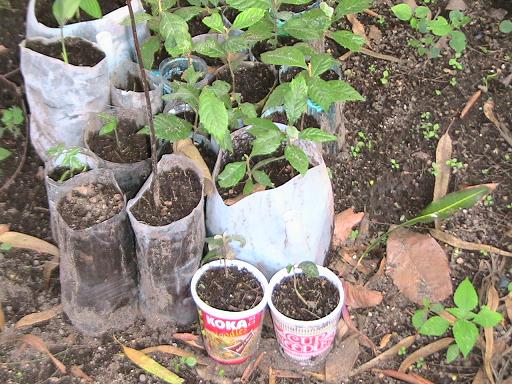
Re-using
'rubbish' at the Bio-Cultura nursery |
|
